

We are approaching the 72nd anniversary of our Independence. Seventy-two years is a long time in the life of a man- indeed it is more than the average Indian’s life expectancy today. Since life expectancy was shorter at the time of Independence, it is safe to say that more Indians born just after Independence are now no more. It is useful to take stock at such a time. Clearly, our founding fathers wanted political freedom for the people of India – freedom to determine who we would be governed by , as well as freedom of thought, expression, belief, faith and worship. They wanted justice and equality, of status and opportunity. And they wanted us to be free from poverty. Our economy is also far richer than it was at the time of independence and poverty has come down substantially. Of course, some countries like South Korea that were in a similar situation then are far better off today but many others have done far worse. Indeed, one of the advantages of a vibrant democracy is that it gives people an eject button which prevents governance from going too bad. Democracy has probably ensured more stable and equitable economic growth than an authoritarian regime might have. Yet a dispassionate view of both our democracy and our economy would suggest some concerns. Even as our democracy and our economy have become more vibrant, an important issue in the recent election was whether we had substituted the crony socialism of the past with crony capitalism. By killing transparency and competition, crony capitalism is harmful to free enterprise, opportunity, and economic growth. And by substituting special interests for the public interest it is harmful to democratic expression too. If there is some truth to these perceptions to crony capitalism, a natural question is “why people tolerate it?”.
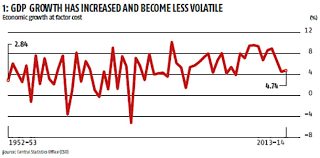
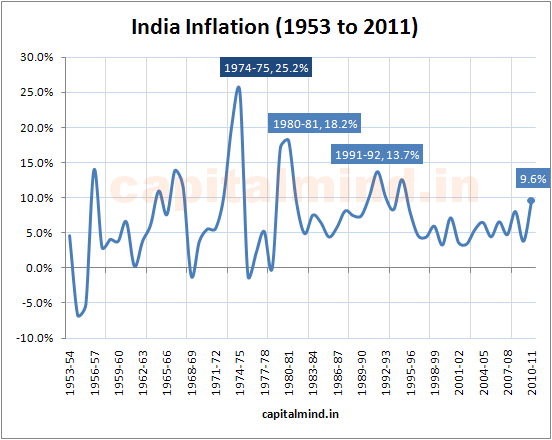
Graphical representation of India’s economic growth from it’s very independence.
These two graphs are of India’s economic growth as well as it’s inflation prospects from the time of Independence. This data pertaining to the economic analysis is all the way taken from the internet and then being represented in front of you.
A hypothesis on the persistence of crony capitalism.
One widely held hypothesis is that our country suffers from want of a “few good men” in politics. This view is unfair to many upstanding people in politics. But even assuming it is true, every so often we see the emergence of a group, usually upper middle class professionals, who want to clean up politics. But when these ‘good’ people stand for election, they tent to loose there deposits. Does the electorate really not want squeaky clean government? Let me explain. Our provisions for public goods is unfortunately biased against access by the poor. In a number of states, ration shops do not supply what is due, even if one has the ration card and too many amongst the poor do not have a ration card or a below poverty line card; teachers do not show up at schools to teach; the police do not register crimes or encroachments, especially if committed by the rich and powerful; public hospitals are not adequately staffed and ostensibly free medicines are not available at the dispensary;…. I can go on , but you the familiar picture. This is where the crooked but savvy politician fits in. While the poor do not have money to ‘purchase’ public services that are their right, they have a vote that the politician wants. There are many politicians who are honest and genuinely want to improve the lot of their voters. But perhaps the system tolerates corruption because the street smart politician is better at making the wheels of the bureaucracy creak, however slowly, in favour of his constituents. And such a system is sustaining. An idealist who is unwilling to ‘work’ can promise to reform it, but voters know that there are very few people with such ideology.
So the circle is complete. The poor and underprivileged need the politician to help them get jobs and public services. The crooked politician needs the businessman to provide the funds that allow him to supply patronage to the poor and fight elections. The corrupt businessman needs the crooked politician to get public resources and public contracts cheaply. And the politician needs the votes of the poor and underprivileged. Every constituency is tied to the other in a cycle of dependence, which ensure that the status quo prevails. Well meaning political leaders and governments have tried, and are trying, to break this vicious cycle. How do we get more politicians to move from fixing the systems to reforming the system? The obvious answer is to either improve the quality of public services or reduce the public’s dependence on them. Both approaches are necessary.
 chandel's finance blog