The Cynicism of Financial Implications.

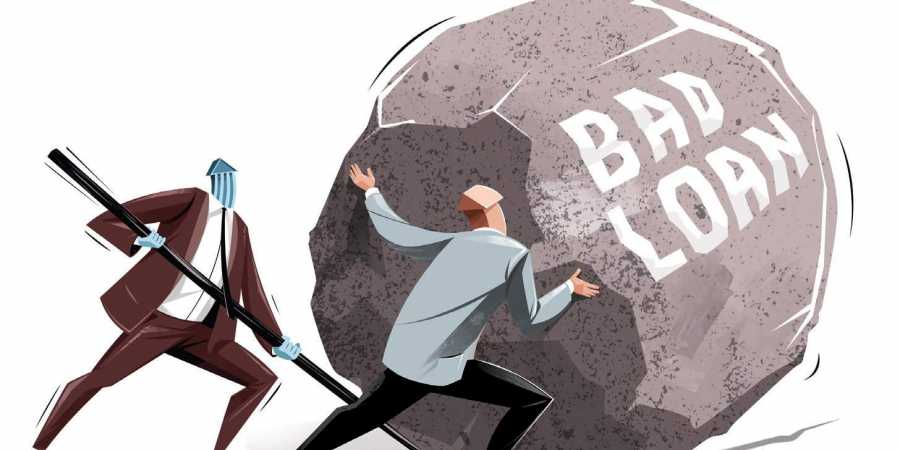
Image result for dark side images in economics
” A goal without plan is just a dream.”

So far we have chanted the virtues of free financial markets. Is there a no downside to the development of financial markets? What about scandals , scams and financial contracts which collapse in a worthless virtual heap?.

Let us first discuss the issues pertaining to the financial distress. Ever so often, a financial institution collapses with a rapidity that leads the astonished public to ask.” are the magnificent downtown headquarters of financial institutions simply fronts for houses of cards built by cardsharps?”. Even though the business of managing and dealing with money is likely to attract more than it’s fair share of rouges. Financial markets know this and protect themselves by placing a better emphasis on reputations and risk controls. The proportion of amoral activities in the financial business is not very different from the norm.

Nevertheless, when in trouble, financial firms tend to collapse much more quickly than industrial firms. There is a reason for this. The modern financial firm can create or destroy value much more rapidly than industrial firms. Take for example derivatives , they are much like dynamite when used properly they can be very beneficial as we have or the organisations have seen so far but when its in the hands of incompetent or unscrupulous hands, they can in few moments can create a catastrophe in the balance sheets of sizes which cannot be matched by even years of incompetent management at an industrial firm. Further, compounding the problem is that the financial markets are aware of the possibilities of misconduct and take action to protect themselves. Debt markets are loath to lend very long term to financial firms because they know that a financial firm’s creditworthiness can change overnight. They would prefer to lend very short term so that they can reassess the financial firm’s risks periodically. Let me offer a quick recap of the macroeconomic situation. Growth is stabilizing on the back of good harvest, strengthening exports and some early signs of resumptions of large organised projects. However, growth is still very weak. We have to work to ensure macroeconomic stability which means empowering growth, especially through investments, maintaining a moderate current account deficit for 2019-2020 will be close to , or below, the finance minister’s red line. Going forward, however, we need to continue on the path of fiscal consolidation constantly improving the sustainability and quality of fiscal adjustments. It is very important that we spend money on needed public investments.

Good fiscal control will help us in our fight against inflation. So, will moderation in agricultural support price inflation, which will ensure that these prices only provide a baseline level of support when the farmer is in difficulty without displacing market prices. Prominent market prices, together with good dissemination of data on sowing patterns, can do a far better job than support prices in directing agricultural production to where it is most valuable and needed. Somewhat paradoxically, raising energy prices to market levels will also lead to a lower inflation over the medium term, the horizon over which the horizon is trying to contain inflation. The reason is that higher prices will reduce excessive consumption reduce subsidies and fiscal deficits and incentivize investment and consumption, even while determining prices by an increasingly stable and plentifully supplied global market for energy. The consequences for inappropriate or inadequate price adjustments will be that the Reserve Bank will have to bear more of the burden in combating inflation.

CORONACONOMICS.

Its really not the time to celebrate the downfall in the prices of oil and other resources. It is the consequence of the growing corona virus disaster that threatens a deep global recession. In every recession commodity prices fall , but that indicates coming pain more than gain. Fiscal and monetary polices which are used to tackle such problems may not work this time. Whether financiers label it as such or not, the world is already in a recession. We have double whammy of demand and supply shocks. The pandemic is forcing not just provinces like Hubei, but entire countries like Italy to shut down to averse the disease and even waive mortgage payments despite the blow to its financial sector. Lending will freeze everywhere. This forced inactivity is a huge demand and supply shock at the same time, since it restricts production and disrupts global value chains.

Now in the present picture, China mentions that the virus in under control, workers are returning to work and closed factories are restarting. But the virus has spread all across the globe and this might get precarious, even to the US. Everywhere, travel, trade, transport, and tourism have crashed. Schools and universities are being closed and the meetings and presentations are being postponed or being cancelled as of now. The oil collapse is another blow to the economy but a sight of joy to the consumers . To combat sustained increase in shale oil production in the US, the Organisation of Petroleum Exporting Countries (Opec) Russia last year agreed on production cuts to stabilise, but then the virus erupted and hindered the oil prices and its demand. Opec and Russia could not agree on further production cuts. So, as a result everyone opened their oil spigots to gain market shares. Brent crude has somehow crashed from $65 a barrel a few months ago to just $35.

The revenue drought will mean less money for government investment at time when private investment has frozen. GoI should mop up half the oil crash windfall through higher taxes to maintain public investment, PM-KISSAN and other schemes. Even so, GDP growth could plunge below 4%. The fall in tax revenue will send fiscal deficit far above budget limits. RBI financed most of the fiscal deficit last year through open market purchases. It should be even more aggressive in the coming year. This leave ample liquidity in the banks and keep the interest rates low.

Economists have been unusually in their assessment of both the impact and policy antidote for the corona virus. Their are couple of things which economists can agree on, though. Firstly, this is both the demand and supply chain shock. While the lockdown of production systems across economies will dent incomes, it will affect the inflation rates not only in India bit other respective nations under corona illuminati. The second and perhaps the most important thing that most of the economists agree on will be that the COVID-19 will work through two effects, the immediate impact will be shutting down of the factories and offices will an output and income but besides this the more lingering impact is the second round impact on global supply chain.

Significant Economic Slowdown.

Image result for imf logo
“India in the midst of significant slowdown : IMF”

Economic recovery will not be sudden, financial institution calls for a urgent policy actions from the government. India is now in the midst of significant economic slowdown, the International Monetary Fund(IMF) has said, urging the government to make urgent policy actions to address the current prolonged downturn. In it’s report released long back ago, the IMF Directors noted that India’s economic expansion in recent years has lifted millions of people out of poverty. However, in the first half of the 2019, a combination of factors led to subdued economic growth in India.

Cyclical , not structural regime.

The issue in India is the growth slowdown as per the recent consensus. We still believe that it is cyclical, not structural because of the financial sectors issues, we think the recovery will be not as quick as we thought earlier. That’s the main the issues. With risks to the outlook titled to the downside, the IMF directors called for continued sound marcoeconomic management. They saw the opportunity with a strong mandate of the new government to reinvigorate the reform agenda to boost the inclusive and sustainable growth. The staff report was done in August when the IMF was not fully aware of India’s current economic slowdown. Growth in the second quarter of FY 2019-20 came in at a six-year low of 4.5% ( year-on-year), and the composition of growth indicates that private domestic demand expanded by only 1% in the quarter. Most high frequency indicators suggests that weak economic activity has continued into December. The IMF attributed this to the abrupt reduction in non-banking financial companies expansion and the associated board-based tightening of credit conditions appears to be an in weak economic growth, especially rural has been affecting private consumption. Private investment has been hindered by the financial sectors difficulties(including PSB’s) and insufficient business confidence. Some implementation issues with important and appropriate structural reforms, such as the nation wide Goods and Service taxes , may also have played a role.

The IMF stated in a recent report that the new growth projections for India, which will come out in January , would be significantly lower than the previous ones.”By other measures, India still is doing well, Reserves have risen to record level. The current account deficit has narrowed. Inflation, although we have a little jump in the present situation because of vegetable prices, we think it has been under control for last few years. So, by other means India is doing quite well. The issue is primarily how to address the growth slowdown. IMF added that it was very surprising for India’s slowdown. IMF also added in the negative when asked if this slowdown can be described as an economic crisis.

ECONOMIC REVIVAL OF BANKS.

Image result for rbi logo pics
” Economic revival is the key to banks proper health”

While the Indian banking financial sector’s financial parameters such as bad loans and capital adequacy have some improvements in recent times, the overall health of banking will depend on revival in economic structures and its radical growth. The Reserve Bank of India(RBI) said in its report on trend and progress of Banking in India 2018-19.” The health of the banking sector hinges around a turnaround in macroeconomic conditions”, the report said. The growth slowdown of the country intensified with GDP growth for the second quarter of the current financial year dipping to a six-year low of 4.5%.

The report noted that during 2018-19, the asset quality of scheduled commercial banks turned around after a gap of seven years with the overhang of stressed assets declining fresh slippages arrested. As a result of the declining provisioning requirement, the banking sector returned to profitability in the first half of 2019-20. Besides, recapitalization had helped public sector banks in shoring up their capital ratios. Despite the improvement in some of these parameters, the risk-averse nature among lenders was worrisome.

The Credit Slowdown.

The slowdown of credit flow to the commercial sector in the first half of 2019-20 was evidence of the aversion to risk. In turn, this waning of confidence is weighing on overall economic activity. This is worrisome as it is taking hold at a time when the recent improvements in asset quality and profitability of the banking sector is at a nascent stage and capital ratios of the Public Sector Banks(PSBs) are shored up due to recapitalization by the government as per stated by the RBI. The report observed that capital infusion by the government in the public sector banks was just enough to meet the regulatory minimum, including capital conservation tactics. Commenting that recapitalization would be a continuous process, the RBI said that going forward the financial health of PSBs should increasingly be assessed by their ability to access capital markets rather than looking to a government as a recapitaliser of the first and last resort.

Strict governance for banks.

strict governance norms for banks are to be planned , as per the statements made by the RBI. These norms will reflect best practices. The Reserve Bank of India is planning to issue fresh corporate governance norms which which will be in lines with global best practices. The growing size and complexity of the Indian financial system underscores the significance of strengthening corporate governance standards in regulated entities. The central bank said recent governance failures in some financial entities have brought to the fore the impact of the quality of corporate governance on efficiency in allocation of resources as well as on financial stability.

Commenting on the issue of the co-operative banks, the banking regulator said given there was a pressing need for an umbrella organization for the sector which can provide liquidity and capital support to member banks and in support of this , the RBI has given approval for it’s formation.

Society and Inclusive Localism.

One of the most contentious issues facing developed countries today, as we have seen, is the diversity of their population. Many developed nations already have ethnically diverse populations. Many will get more diverse because of fast growing minority groups, as well as inflows of immigrants and refugees. There are costs associated with diversity. These include the burden of absorbing poor immigrants initially, which falls disproportionately on poorer domestic communities, and the lower mutual empathy between communities once the nation becomes more diverse, which leads to less support for a national safety net. Ethnically homogenous countries also fear a loss of their cultural heritage. Nevertheless, for most of the countries, there is turn back. Even if they stop most immigration, they will get more diverse unless they choose to become authoritarian and illiberal towards their minority and immigrant populations,thus imperiling their liberal democratic ethos. Moreover there are enormous benefits to diversity, as we will see. How do countries reconcile the prospect of increasing national diversity with the majority group’s genuine fear of being swamped, of losing cultural coherence and community? One way is through inclusive localism. For some populists nationalists, immigration is their key worry. For others, it is existing minorities. For many, it is both. Let us focus on immigration issues for now, though much of what follows pertains to the minorities also – after all, today’s immigrant is tomorrow’s minority – and the terms be often be used together.

The life chances for a citizen of the United States are vastly different from the life chances of a citizen of the Democratic Republic of Congo. Citizens benefits from national borders. Borders protects the rents citizens get from the country’s wealth, institutions and power. In effect, the nations are the last of the guilds. By restricting decision making largely to those living in the demarcated lands, borders give the citizens a sense of self-determination and political control over their lives and an ability to protect their cultural traditions. By only allowing people in who share something in common, such as values or empathy that allow collective national efforts and engender ethnicity that allows the country create support structures such as public schools, safety nets, and disaster relief. Therefore, while borders get in the way of productive efficiency, they may be necessary for the structure that help citizens manage manage modern life. It would be nice to move toward one borderless world- where we feel empathy for one another as citizens of the world.

Whether the lottery of birth that distributes citizenship should be a right for those who have paid their dues such as fighting in wars, or a gift to be bestowed by the citizenry who obtain their rights merely by birth. Taking the desire of citizens to control entry as legitimate, what factors should determine it? This is probably the question that most of the major authorities don’t want to answers or get into.

Macroeconomic Counsel.

Let me offer a quick recap of the macroeconomic situation. Growth is stabilizing on the good harvest, strengthening exports, and some early signs of resumptions of large stalled projects. However, growth is still very weak. We have to work to ensure macroeconomic stability, which means strengthening growth, especially through investment, maintaining a moderate current account deficit, achieving a fiscal deficit consist with government’s fiscal roadmap, and reducing inflation. The government has to be commended for it’s efforts to revive growth, narrow the current account deficit , and fiscal targets. I have no doubt that the fiscal deficit or the year 2019-2020 will be close to, or below, the finance minister’s red line.

Going forward, however, we need to continue on the path of fiscal consolidation constantly improving the sustainability and quality of fiscal adjustment. It is very important that we spend money on needed public investment, even while reducing misdirected subsidies and entitlements. Good fiscal control will help us in our fight against inflation. So, will moderation in agriculture support price inflation, which will ensure that these prices only prices a baseline level of support when the farmer is in difficulty, without displacing market prices. Accurate market prices, together with good dissemintaion of data on swoing patterns, can do a far better job than support prices in directing agricultural production to where it is most valuable and needed.

Somewhat paradoxically, raising energy prices to market levels will also lead to lower inflation over the medium term, the horizon over which the RBI is trying to contain inflation. The reason is that the higher prices will reduce excessive comsumption, reduce subsidies and fiscal deficits and incentivize investment and competition, even while allowing prices to be determined by an increasingly stable and plentifully supplied global market for energy. The consequences of inappropriate or inadequate price adjustments will be that the Reserve Bank will have to bear more of the burden combating inflation.

DEBT RESOLUTION AND AUGMENTATION.

“Achieving Credit targets without due diligence can create environment for future NPA’s”

In a number of developed countries, debt relief for low-income countries has become an important issue political issue. Politicians rightly point to the overwhelming burden borne by poor countries who have to set aside a significant fraction of their national income to repay creditors. Worse still, they argue much of this debt is odious built up by past corrupt dictators who whisked the money to Swiss bank accounts. Furthermore, evidence that countries with high debt tend to have low growth suggests that debt relief can help poor countries to grow. several debt relief proposals are on the table, but there is little agreement among donors on which one makes the most sense.

WHERE’S THE COMPETENCE?

The Indian economy keeps sliding downwards. GDP decelerated steadily from 8.2% in the first quarter of 2018-19 to 5.8% in the last quarter . Is this a short term blip, or a deeper more serious structural problem ? The correct answer is ‘both’. The combined impact will exemplify a growth no more than 5 to 5.6% in 2019-20, against the officially projected 7.5%. Countercyclical strategies using fiscal and monetary easing can combat short-term threats. But the long-term outlooks are gloomy, since India has ceased to be internationally competitive, with exports barely growing for the last five years. Politicians are giving no priority to restoring competence, and instead are falling back on protectionist nostrums , raising import duties on dozens of items year after year. This threatens to sink India’s long term prospects.

WHERE’S THE ECONOMY HEADED?

Exports and Flourish. No country has sustained 7% growth without buoyant exports. Fast growth wants a competitive economy and a political assistance will help that competence move forwards and will improve accordingly. The absence of political will in India is dragging down long- term growth. That cannot be fixed by fiscal or monetary boosts. The global economy is slowing and taking India down with it. The International Monetary Fund (IMF) projects world GDP growth slowing from 3.6% in 2018 to 3.2% in 2019. Export oriented Singapore and South-Korea have registered negative export growth, ringing alarm bells of global deterioration caused mainly by the US-China trade war. Interest rates are already so low in many countries that their central banks find it difficult to use monetary policies to stimulate growth in response to economic slowdown. Central banks have created a huge global economic bubble, which is going to burst someday with ruinous consequences. In the April-June quarter, growth in EU was barley 0.2%. Export oriented Germany is on the brink of recession, with all top corporations reporting plunging exports. British GDP fell 0.2% in latest quarter reflecting Brexit uncertainties. The US Economy grew at a decent 2.1% but this was down from 3.1% in the first quarter, suggesting that the fiscal stimulus of Presidents Donald Trump’s tax cuts in 2018 is tapering off. Faster, Higher, Stronger. Three droughts in five years, combined with low agricultural prices , often below the minimum support price (MSP), have dented rural demand. Possibly a good monsoon this year will stock a rural recovery, but it cannot offset the impact of the global slowdown. Some economist want a fiscal boosts to revive demand, raising the fiscal deficit to say, 4% of the GDP. However, economies have automatic equilibrium. In a downturn , tax revenue falls while spending on safety nets increases, so that the fiscal deficit increases without any conscious effort to do so. While agricultural and global cycles will reverse after a dip , no automatic revival can be assumed for the lack of competence. Global trade wars and currency wars are going to make exports more difficult than ever. The response should be able to tackle all the factors that make India less competitive.

FinMin’s Initiative Failure in India.

Image result for finmin failure in india
“The only real mistake is the one from which we learn nothing.”

A very miraculous step taken by the finance ministry of India in last month pertaining to the cut in corporate tax was greeted as the biggest market friendly step in last few years but overseas funds remain indifferent to the government’s attempts to revive the economy. Out of the 10 trading sessions since September 20 when finance minister Nirmala Sitharaman announced the stimulus , foreign investors have dumped shares in seven. Market participants said worries about the downturn, uncertainly over India’s Financial sector plagued by bad assets and the impact of the tax cuts on the countries finances have overshadowed the early bursts of optimism over the stimulus.

“THERE IS NOT MUCH INTEREST IN INDIA FROM FOREIGN INVESTORS BECAUSE OF ECONOMIC SLOWDOWN. THE PROBLEMS WITH THE CO-OPERATIVE BANK DOES NOT REALLY HELP THE CONCERNS IN THE BANKING SECTOR” said Andrew Holland, CEO, Avendus Capital Alternate Strategies. Data showed foreign portfolio investors (FPIs) are net buyers worth 9,500 crore since September 20 but that is because of their buying of 11,000 crore on September 26. But for the exceptional single day inflow because of a string of block deals in ICICI Lombard General Insurance, analysts said data would have showed net sales. In October so far they have pulled 3,300 crore out of Indian equities after selling the tune of 6,300 crore worth of shares in September.

The crisis at one of the largest co- operative banks in India is the latest addition to unresolved problems of the banking system, already reeling under a pile of non-performing loans. Markets watchers said the corporate tax rate cut would boost earnings but they remain uncertain about it’s impact on the economy. “IT’S DIFFICULT TO JUSTIFY UPSIDE TO THE NIFTY BASED JUST ON THE FIRST ORDER EFFECTS OF THE TAX CUTS” said Sanjay Mookim , India equity strategist, Bank of America Merrill Lynch in a recent note. Sensex and Nifty rose almost 9% after the announcement of the corporate tax cut and while the index has come off it’s highs due to concerns around the health of the financial sector.

It is still up 4.4% from the date of the tax cut announcement. Concerns over impeachment probe against US President Donald Trump and US-China trade tensions have also impacted the market sentiments. Indian stock indices ended down 1.3% on Friday as the 25 bases points cut by RBI fell short of expectations. The central bank cut also it’s economic growth projection for this fiscal to 6.1% from 6.9%. India’s GDP growth slipped to a five year low 5% in the quarter ended June. Till then, optimists will rely on domestic institutional buying which have cushioned market downsides. After buying shares worth 11,079 crore in September they have pumped to 1,930 crore into stocks in October so far.

Time to Re-form the Reform.

At this stage, there’s no short -cut to faster growth other than rising productivity and investment”

India’s GDP has grown at an annual average rate of 7.5% during the five years ended 2018-19. This average figure marks the considerable variation in the annual rates, which peaked at 8.2% in 2016-17, and bottomed out at 6.8% in 2016-17. In the quarter ended March 31, 2019, growth fell to the worrying level of 5.8%. According to most reports, recovery in the growth rate appears sluggish. Some commentators point to the monetisation as a key trigger that led to the fall in the growth rate. But proponents of this view have provided no credible supporting evidence. Given that demonetisation took place on 8th November 2016, it’s impact should have been concentrated in 2016-17, which is not in this case. One may invoke the argument that the effect took place with a lag. But given the instantaneous nature of the event absence of any perceptible immediate impact greatly undermines the validity of the arguments. According to another hypothesis, introduction of the goods and services tax (GST) and the other disruption accompanying it were responsible for the decline. While there is some truth in this, GST disruption is largely behind us. I would argue that the most important sources of the slowdown is weakness in the financial sector. The beginning of the decline in the growth rate in 2017-18 coincided with the sharp decline in the growth of credit by public sector banks (PSBs) due to large and rising level of non-performance assets (NPAs). Credit by non- banking finance companies (NBFC’s) partially filled the gap but it’s growth could not be sustained. Though growth in bank credit has seen some recovery within the last year, it remains sluggish.

Doubts Remain

Three recent measures- surcharge on income tax on the rich, protective custom duties on several products and introduction of jail term for failure to meet prescribed corporate social responsibility (CSR) expenditures have also hurt market sentiments. Though their impact on growth will be felt over time, they have raised doubts in the minds of the investors. The decision to proceed with four labour codes, without any reform of underlying labour laws, has reinforced these doubts. Pulling in the opposite direction are several reformist measures. Of immediate relevance is the amendment to the Insolvency and Bankruptcy Code (IBC) which will help speed up much needed resolution of NPA’s of PSB’s. The National Medical Commission Act (NMCA) is a bold , pathbreaking reform that promises significantly improved outcomes in the medical education and hence the health sector. The decision to privatise several PSU’s if implemented would go a considerable distance. Finally a Higher Education Commission Act and National Research Foundation, announced in the recent Budget speech, carry the potential to entirely transform India’s higher educational system. In the current fiscal year, growth is unlikely to recover in a major way. Two factors pose a challenge to private corporate investments which is critical to growth acceleration. First, available data suggests that once we take into account off-budget borrowing of the government , the combined fiscal deficit of the Centre and states is mopping up almost all of financial savings of households. Secondly, the financial markets remain weak, undermining intermediation of available financial savings by corporations. Immediately corrective actions, both falling under the purview of RBI: cut in the interest and allow the rupee to depreciate. Due to continued low inflation, real interest rate is exceptionally high today. Therefore RBI is in a position to affect a significant cut in it without fear of missing it’s inflation target, with is allowed to rise up to 6% under current the correct legislation. While improving investor sentiment, an interest rate would also help improve the financial health of the banks.

Stand Up and Be Counted.

In the longer term, there is no short-cut to faster growth other than accelerated growth in productivity and investment. Both require pro-markets reforms. It is futile to blame consumption demand when the real problem is the inability of our industries to stand up to foreign competition. The world merchandise export market is $17 trillion, and India’s share in it is just 1.7%. A more competitive domestic industries could have easily escaped weak domestic demands by exporting more. Auto industries at the forefront of those complaining about weak consumption demands, offers the most compelling examples from this perspective. After 70 years of absolute protection, it has less then one percent share in the world exporters of passenger cars. Even in the domestic markets, it is able to survive only because of 50-100% tariffs on imported cars allows it to charge the customer one-and- a half times the price customers in the rest of the world pay for similar cars. This must change.

Finance and Opportunity in India.

“Excuses will always be there against growth , but opportunities won’t”

We are approaching the 72nd anniversary of our Independence. Seventy-two years is a long time in the life of a man- indeed it is more than the average Indian’s life expectancy today. Since life expectancy was shorter at the time of Independence, it is safe to say that more Indians born just after Independence are now no more. It is useful to take stock at such a time. Clearly, our founding fathers wanted political freedom for the people of India – freedom to determine who we would be governed by , as well as freedom of thought, expression, belief, faith and worship. They wanted justice and equality, of status and opportunity. And they wanted us to be free from poverty. Our economy is also far richer than it was at the time of independence and poverty has come down substantially. Of course, some countries like South Korea that were in a similar situation then are far better off today but many others have done far worse. Indeed, one of the advantages of a vibrant democracy is that it gives people an eject button which prevents governance from going too bad. Democracy has probably ensured more stable and equitable economic growth than an authoritarian regime might have. Yet a dispassionate view of both our democracy and our economy would suggest some concerns. Even as our democracy and our economy have become more vibrant, an important issue in the recent election was whether we had substituted the crony socialism of the past with crony capitalism. By killing transparency and competition, crony capitalism is harmful to free enterprise, opportunity, and economic growth. And by substituting special interests for the public interest it is harmful to democratic expression too. If there is some truth to these perceptions to crony capitalism, a natural question is “why people tolerate it?”.

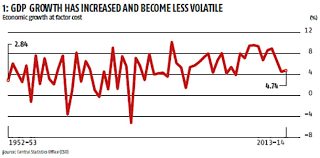
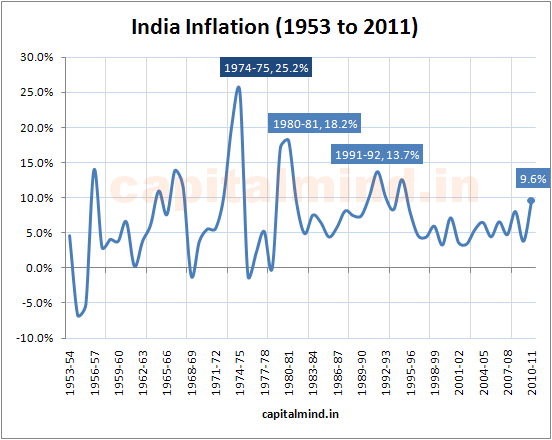
Graphical representation of India’s economic growth from it’s very independence.

These two graphs are of India’s economic growth as well as it’s inflation prospects from the time of Independence. This data pertaining to the economic analysis is all the way taken from the internet and then being represented in front of you.

A hypothesis on the persistence of crony capitalism.

One widely held hypothesis is that our country suffers from want of a “few good men” in politics. This view is unfair to many upstanding people in politics. But even assuming it is true, every so often we see the emergence of a group, usually upper middle class professionals, who want to clean up politics. But when these ‘good’ people stand for election, they tent to loose there deposits. Does the electorate really not want squeaky clean government? Let me explain. Our provisions for public goods is unfortunately biased against access by the poor. In a number of states, ration shops do not supply what is due, even if one has the ration card and too many amongst the poor do not have a ration card or a below poverty line card; teachers do not show up at schools to teach; the police do not register crimes or encroachments, especially if committed by the rich and powerful; public hospitals are not adequately staffed and ostensibly free medicines are not available at the dispensary;…. I can go on , but you the familiar picture. This is where the crooked but savvy politician fits in. While the poor do not have money to ‘purchase’ public services that are their right, they have a vote that the politician wants. There are many politicians who are honest and genuinely want to improve the lot of their voters. But perhaps the system tolerates corruption because the street smart politician is better at making the wheels of the bureaucracy creak, however slowly, in favour of his constituents. And such a system is sustaining. An idealist who is unwilling to ‘work’ can promise to reform it, but voters know that there are very few people with such ideology.

So the circle is complete. The poor and underprivileged need the politician to help them get jobs and public services. The crooked politician needs the businessman to provide the funds that allow him to supply patronage to the poor and fight elections. The corrupt businessman needs the crooked politician to get public resources and public contracts cheaply. And the politician needs the votes of the poor and underprivileged. Every constituency is tied to the other in a cycle of dependence, which ensure that the status quo prevails. Well meaning political leaders and governments have tried, and are trying, to break this vicious cycle. How do we get more politicians to move from fixing the systems to reforming the system? The obvious answer is to either improve the quality of public services or reduce the public’s dependence on them. Both approaches are necessary.

Design a site like this with WordPress.com
Get started