
Resolving Stress in the Banking System.

“Beware of small expenses. A small leak can sink a great ship”

Ordinarily, in a city like Bangaluru, we would talk about startups. Today, however, I want to talk about the resolution of financial distress. I want refute the argument that monetary policy has been too tight. Instead, I will argue that the slowdown in the credit growth has been largely because of stress in the public sector banking, which will not be fixed by a cut in the interest rates. Instead, what is required is a clean-up of the balance sheets of public sector banks, which is what is under way and needs to be taken to it’s logical conclusion. Specifically, I want to describe what the banks have been doing in India to change the culture surrounding the loan contract.

PUBLIC SECTOR LENDING vs PRIVATE SECTOR LENDING.

The data indicate public sector bank non-food credit growth has been falling relative to credit growth from the new private sector banks since early 2014. This is reflected not only in credit to industry but also in micro and small enterprise credit. The relative slowdown in credit growth, albeit not so dramatic, is also seen in agriculture, though growth is picking up once again. Whenever one sees a slowdown in lending, one could conclude there is no demand for credit- firms are not investing. But what we see here is a slowdown in lending by public sector banks. The immediate conclusion one should draw is that this is something affecting credit supply from the public sector banks specifically, perhaps it is the lack of bank capital. Yet if we look at retail loan growth, and specifically housing loans, public sector bank loan growth approaches private sector bank growth. The lack of capital therefore cannot be the culprit. Rather than across the board shrinkage of public sector lending, there seems to a shrinkage in certain areas of high credit exposure, specifically in loans to industry and to small enterprise. The more appropriate conclusion is that the public sector banks have been shrinking exposure to infrastructure and industry risk right early from 2014 because of mounting distress on their past loans. Private sector banks many of which did not have these past exposure, were more willing to service the mounting demand for both their traditional borrowers, as well as some of those corporate’s denied by the public sector banks. Given, however, that public sector banks are much bigger than private sector banks, private sector banks cannot substitute fully for the slowdown in public sector bank credit. We absolutely need to get public sector banks back into lending to industry and infrastructure, else the credit and growth will suffer as economy picks up.

THE SOURCES OF LENDING DISTRESS: BAD FEATURES.

Why have bad loans been made? A number of these loans were made in 2007-08. Economic growth was strong and the possibilities limitless. Deposit growth in public sector banks was rapid, and a number of infrastructure projects such as power plants had been completed on time and within budget. It is at such times that banks make mistakes. They extrapolate past growth and performance to the future. So they are wiling to accept higher leverage in projects, and less promoter in equity. Indeed sometimes banks signed up to lend on project reports by the promoter’s investment bank, without doing their own due diligence. One promoter stated about how he was pursued then by banks waving cheque books, asking him to name the amount he wanted. This is the historic phenomenon of irrational exuberance, common across countries at such a phase in the cycle. The problem is that growth does not always take place as expected. The years of strong global growth before the global financial crisis were followed by a showdown , which even extended to India, showing how much more integrated we had become in the world. Strong demand projections for various projects were shown to increasingly unrealistic as domestic demands were slowing down. Moreover, a verity of governance problems coupled with the fear of investigation slowed down bureaucratic decision making in Delhi, and permission for infrastructure projects becomes hard to get. Project cost overruns escalated for stalled projects and they became increasingly unable to service debt.
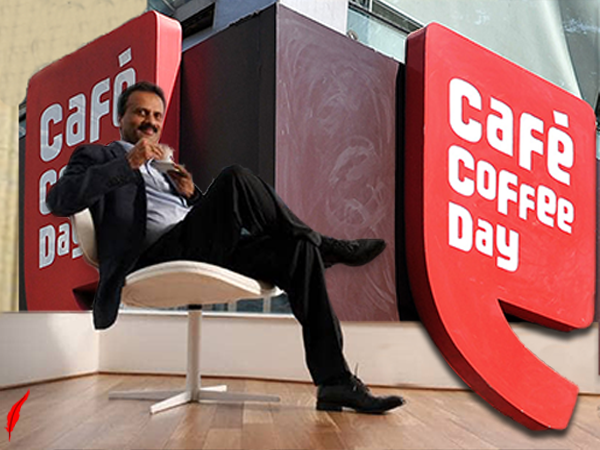
Curious case of CCD founder: The dawn of a reign.

“Indeed a lot more can happen over a coffee”

V G Siddhartha was under heavy debt burden.

As the search for the coffee day founder VG Siddhartha continues, the mystery behind the entrepreneur going missing has become murkier with the emergence of a letter addressed to the company board. Though the genuineness of the letter is yet to be established, Siddhartha has allegedly pointed out the pressure from private equity firms for early exits. Coffee Day Enterprises, the holding firm of Coffee Day, had a total debt of around Rs.6,550 crore as on march 2019 reported. Sources in the known said that debt level of the entity has drastically reduced after Siddhartha’s stake sale in Mindtree, for those who aren’t familiar with what is Mindtree , it’s a Indian multinational information and outsourcing company which is owned by Larsen and Toubro. In March this year, he had sold his entire 20.32 percent stake in Bangaluru headquartered IT Services firm to engineering major, L&T for around Rs.3,200 crore, which had been utilised to pair some debt from Coffee Day Enterprise’s balance sheet. Industry experts said that the Mindtree stake sale to L&T despite of opposition from it’s founders could be linked to the desperateness of Siddhartha to reduce the company’s debt, which was taking a toll on the working capital need of the firm due to high-interest outgo. Recently, news reports also suggested that Coffee Day Group was in talks with global beverage maker Coca-Cola for selling a slice of it’s equity at an enterprise valuation of around Rs.10,000 crores. Other than coffee retail chain and his investment in tech firms, the Coffee Day Group has diversified in it’s bid to emerge as a business conglomerate. The group did well into real estate through it’s wholly owned subsidiary Tanglin, which develops technology parks and special economic zones for IT Industries. It’s logistics arm, Sical, provides end-to-end solution in port handling, road and rail transport areas. The group has also ventured into hospitality through Coffee Day Hotels & Resorts. Way2Wealth is a leading financial service provider from Coffee Day’s stable. Though, the total enterprise value of the group is yet to ascertained as most of them are privately held but some reports had suggested that private equity major Blackstone was in talks to buy majority stake in Siddhartha’s real estate venture Tanglin Developments for around Rs.2,800 crore. Tanglin has a tech park – ‘Global Village’ , which is 4 million-sq ft tenanted office space located in 120 acre campus in Bangaluru, and counts Accenture and Mphasis among it’s tenants.

Cafe Coffee Day(CCD), set up in August 1996, has grown to include 1,750 stores across India with 60,000 vending machines as of now. It also has outlet’s across Europe as well as in Malaysia, Nepal and Egypt. The group’s coffee business, which includes some exports of the bean, reported a revenue of Rs. 1,777 crores in FY18 and Rs. 1,814 crores in FY19.

What actually went wrong?

With the rising competition from new retail chains and capital incentive nature of some of his businesses, Siddhartha was under pressure. But, the group has better financial health than many other debt laden conglomerates. VG Siddhartha’s death is an eye-opener on how weak an entrepreneur is. In the typewritten note released by the news agency ANI, Siddhartha appeared to apologize for “failing to create the right profitable business model”. He said pressure from his private equity partners and other lenders, as well as , harassment from the income tax department, had become unbearable. Nobody knows for certain that who were those partners or partner Siddhartha had in mind, or why they were allegedly”forcing” him to buy back shares. But, one thing is for sure that happened is the income tax department had been pushing him; with typically bad taste , the taxman attempted to rebut Siddhartha’s accusation of harassment by saying that they were only “protecting the interest of revenue” by blocking the entrepreneur’s access to his Mindtree shares at a time when he desperately needed liquidity to reduce his debt. And yet Siddhartha wrote in his note: “My intention was never to cheat or mislead anyone, I have failed as an entrepreneur.” The tragedy is that he needed to emphasize that distinction. Businessman whose bets have gone bad must fear arrest as well as bankruptcy. In particular, as in many other countries, tax raids can be used as bludgeons against anyone politically exposed, even legitimate businessman.

The income tax department operates through fear.

People in business never know when inspectors will turn up or what they will do. In this case, Siddhartha’s troubles may not have been unrelated to the fact that he was the son-in-law of a politician once prominent in the opposition Indian National Congress party. The income tax department raided the homes and offices of another high profile Congress politician in 2017, at precisely the time he was attempting to preserve an opposition government in Siddhartha’s home state of Karnataka. Tax officials now admit that their allegations against Siddhartha arose from these raids.

The above detailed case study of VG Siddhartha’s unwanted demise is a lesson for us, for the businessman and the emerging entrepreneur not to take their liabilities over them because they also have a family , a group of well wishers who get into more pain than the person who left the world. Ups and Downs are there in everybody’s life but it’s our responsibility to emerge victoriously and I would request the government, the stakeholders and the money lenders to work together as a team rather then always running behind the borrowers life for the clearance of the debt to bring out the perfect resilience.

Make in India: A new hope for financial prosperity.

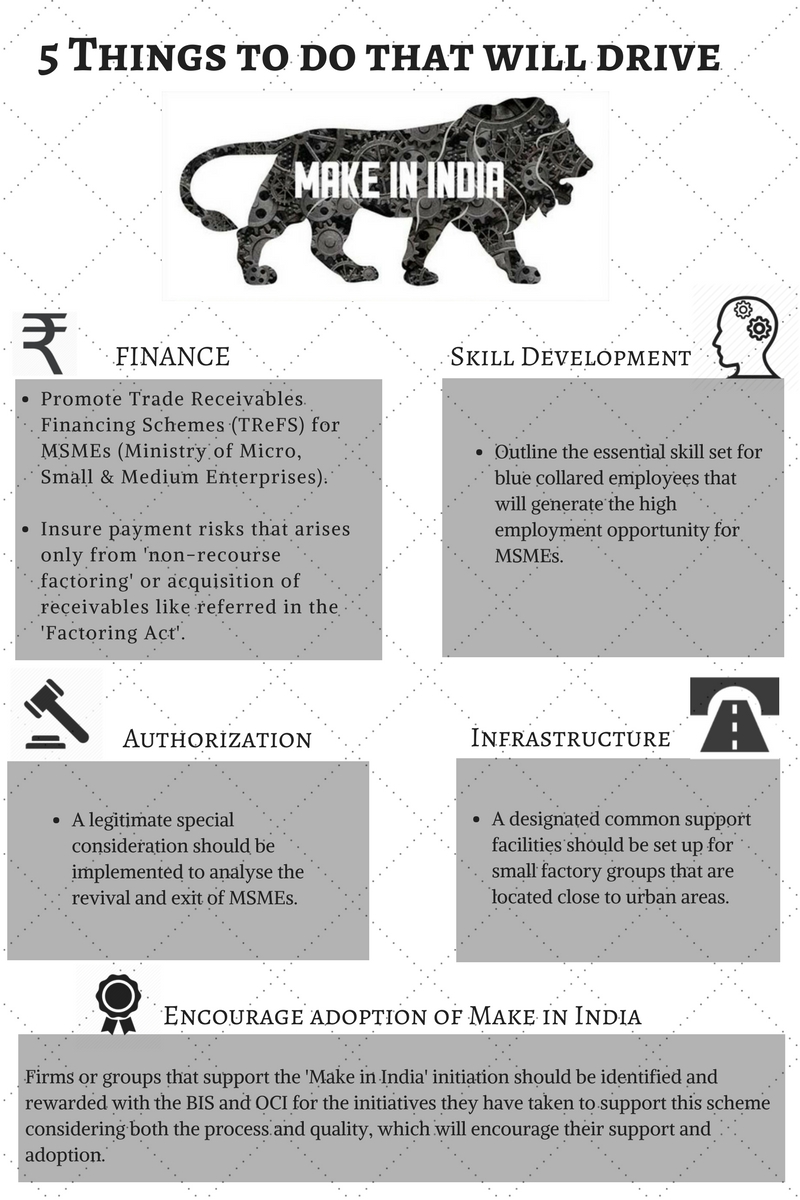
Make in India is a lion’s step, it’s symbol has an impression of a lion which is made up of cogs.

Perhaps the most important proposal for the renovation of India’s financial future was the NDA(National Democratic Alliance) government’s proposal to make ‘Make in India’. I as a citizen thought it was a excellent idea, for it would mean the government would focus on the improvisation of India’s capacity to produce , whether it be goods or services, either for the domestic economy through import substitution , or for the global economy through exports. I thought it’s becoming important to clarify that making in India did not necessarily mean selling primarily to the export markets . Given both slow global growth as well as increasing protectionism, we should not rule out making for the large and vibrant Indian market. In the short run we would probably make in India , largely for India. The longer run could be different, depending upon the circumstances developed.

The global economy is still weak, despite a strengthening recovery in the United States. The euro area is changing it’s direction suddenly close to recession , Japan has already experienced two quarters of negative growth after a tax hike, and many emerging markets are rethinking their export-led growth models as the industrial world stagnates. In the last couple of years IMF has repeatedly reduced it’s growth forecasts. After six years of a tepid post-crisis recovery , the IMF titled its most recent world economic outlook.

WHAT ABOUT EMERGING MARKETS?

Slow industrial country growth has made more difficult a traditional development path for emerging markets – export -led growth. Indeed, in the last decade , even as China developed on the back of it’s exports to industrial countries , other emerging markets flourished as they exported to China. Emerging markets have to now again rely on the domestic demand, always a difficult task because of the temptation to emerging overstimulate. That task has become more difficult because of the abundance of liquidity sloshing around the world as a result of ultra-accommodative monetary policies in industrial countries. Any signs of growth can attract foreign capital , and if not properly managed, these flows can precipitate a credit and asset price boom and exchange rate overvaluation. When industrial country monetary policies are eventually tightened, some of the capital is likely to depart emerging market shores. Emerging markets have to take extreme care to ensure they are not vulnerable at that point. What implications should an emerging economy like India, which has weathered the initial squalls of the ‘Taper Tantrums’ of the summer of 2013, take away for it’s polices over the mediums term? I would focus on three: 1) Make in India; 2) Make for India; 3) Ensure transparency and stability of the economy.

LESSONS FOR INDIA

  1. MAKE IN INDIA. The government has the commendable aim of making more in India. This means improving the efficiency of producing in India, whether of agricultural commodities, mining, manufacturing, or services. To achieve this goal , it has to implement it’s ambitious plans for building out infrastructure. A second necessity for increasing productivity in India is to improve human capital. This requires enhancing the quality and that people are healthy and able. People also need better and more appropriate education, skills that are valued in the labour markets, and jobs where firms have the incentive to invest more in their learning.
  2. MAKE FOR INDIA. If external demand growth is likely to be muted, we have to produce for the internal market. This means we have to work on creating the strongest sustainable unified market we can, which requires a reductions in the transactions costs of buying and selling throughout the country. Improvements in the physical transportation network will help in the cases but to those only who are efficient and competitive intermediaries in the supply chain from producers to the consumers. A well designed GST bill, by reducing state border taxes, will have the important consequence of creating a truly national market for goods and services, which will be critical for our growth in years to come.
  3. ENSURE TRANSPARENCY AND STABILITY OF THE ECONOMY. Now even developed countries like Portugal and Spain have been singularly unable to manage domestic demands. Countries tend to overstimulate, with large fiscal deficits, large current account deficits, high credit and asset price growth, only to see growth collapse as money gets tight. The few countries that have avoided such booms and busts typically have done with sound policy frameworks. As a country that does not belong to any power blocks, we don’t ever want to be in a position where we need multilateral support. It will be all the more important to get our policy frameworks right. Clearly, a sound fiscal framework around a clear fiscal consolidation path is critical.

Saving Credit.

If you don’t take good care of your credit, then your credit will also not take good care of you.

Many a times it has been seen that the demand for bank credit is weak rather not very stable, even while we are likely to have enormous demand for it if investment picks up, banks have to go through the formal consensus and have to look upon the Indian banks own credit systems so as to ensure the capital ongoing and the entire inventory system of financial assistance. Unfortunately , on going through the data and consensus banks come onto a conclusion that India’s credit system is not in a good health. Banks need a fundamentally strong reforms which are able to change the mindset of consumers. A public lecture in the memory of a great Indian who did much to change our mindsets is a perfect place to make the case.

THE DEBT CONTRACT.

The flow of credit relies on the sanctity of the debt contract. A debt contract is now where a borrower, be it a small farmer or a promoter of a large petrochemical plant, raises money with the promise to repay with interest and principal to a specified contract or schedule. If in case the borrower is somehow not able to meet his commitment or promises, he is in a default. In the standard debt contract in case of any default the borrower has to make some substantial sacrifices, else he would have no incentives to repay. Now lets get into some history regarding this interesting topic. For instance , a defaulting banker in Barcelona in medieval times was given time to repay his debts, during which he was put on diet of bread and water. At the end if in case he was not able to pay he was beheaded.Punishments became less harsh over time. If you defaulted in Victorian England, you went to debtor’s prison. Today, the borrower typically only forfeits the assets that have been financed, and sometimes personal property too if he is not protected by limited liability, unless he has acted fraudulently. Why should the lender not share to the losses to the full extent? That is because he is not a full managing partner in the enterprise. In the return for not sharing large profits if the enterprise does well, the lender is absolved from sharing the losses when it does badly, to the extent possible. By agreeing to protect the lender from ‘downside’ risk , the borrower gets cheaper financing .

VIOLATING THE SPIRIT OF DEBT.

The problem which needs to be discussed is that the sanctity of the debt contract has been continuously eroded in India in recent years, not by the small borrower but by the large borrower. And this has to change if we are to get the banks to finance the enormous infrastructure needs and industrial growth that this country aims to attain. The reality is that too many large borrowers do not see the lender, typically a bank , as holding a senior debt claim that overrides all the claims when the borrower gets into trouble but as a holding a claim junior to the borrower’s own equity claim. The uneven sharing of risk and returns in enterprise , against all contractual norms established the world over where promoters have a class of ‘super’ equity which retains all the upsides in good times and very little of the downside in bad times, while creditors, typically public sector banks, hold ‘junior’ debt and get none of the fat returns in good times while absorbing much of the losses in the bad times.

When Does Finance Develop?

Is financial development doomed never to take place because incumbents are so powerful? Clearly not.. Some countries have enjoyed a strong financial systems at certain points in time, and there has been a worldwide boom in the financial sector in the last few decades. This must mean that sometimes incumbents cannot get together to block development, and even if they do so, the tyranny of incumbents can be broken and development unleashed.

The notable reason behind for incumbents not to oppose development blindly is that they themselves can benefit from financial development when their investment opportunities are high relative to their ability to finance them. A sudden expansion in required scale, perhaps because of an opening of new markets for their products, increases their demands for financing. Alternatively, a sustained period of poor economic conditions may deplete incumbents reserves of cash, forcing them to seek finance and allowing them to be more amenable to financial development when the economy turns up.

Financial system is the set of systems, institutes, instruments , markets as well as the legal and regulatory framework that permit transactions to be made by extending credit. Fundamentally, financial sector is about overcoming costs incurred in the financial system. This process of reducing the costs of acquiring information, enforcing contracts, and making transactions resulted in emergence of financial contracts, markets and intermediaries. Different types and combinations of information, enforcement and transaction costs in conjunction with different legal, regulatory and tax systems have motivated distinct financial contracts, markets, and intermediaries across countries and throughout

FUNCTIONS OF FINANCIAL SYSTEM.

(a) Producing information ex ante about possible investments and allocate capital.

(b) Monitoring investments and exerting corporate governance after providing finance.

(c) Facilitating the trading, diversification, and management of risk.

(d) Mobilizing and pooling savings.

(e) Easing the exchange of goods and services.

IMPORTANCE OF FINANCIAL DEVELOPMENT.

A large presence of proves or evidence confers that financial sector development is primarily very important for economic development. It encourages economic growth by capital accumulations and technological progress by increasing the saving rates, mobilizing and pooling savings, awareness regarding investments. Financial development has a impeccable impact on the emerging markets, banking systems, increasing the commencement for financial inclusions which eventually assists in creating that very desired structure for financial development when seen from a holistic point of view. When seeing this increase in the financial development the economy of any country automatically increases, just as like having a directly proportional kind of a relationship, more is the financial development, greater are the chances of increasing economy.

Finally, and perhaps most important, increased competition resulting from forces beyond the control of incumbents in particular, competition as a result of technological changes and competition stemming underdevelopment as a barrier of domestic entry. We now need to examine all this in very comprehensive way to bring out more valuable ideas that could bring up the cause of collecting all those reasons so as to create a developing financial system and create a better global economy.

Financial Inclusions.

Knowledge matters.

The financial inclusions in this era of increasing economy is a subject of great concern and hot topic for discussion. Simply because as we are very familiar with growth rates of the various countries and perceiving a feel that it has to increase a lot more and on the other hand we also come across a very horrifying fact that in countries like India whose economy is growing at it’s rapid pace has a very limited or sometimes below that financial inclusions. People are rather dubious about the whole idea of financial inclusions instead of having literacy for that in any case and because of this lack of knowledge people are somehow deprived of the welfare which they could get out of financial inclusions.

What’s that reason which makes this possible? On, one hand we have a improving economy and on the other side people are not indulging themselves into financial inclusions. I suspect if this situation is allowed to prevail , banks are going to run out of financial sustainability. Despite this high return from the delivery of credit to the poor , and despite much of bank’s financial inclusion efforts being focused on credit, they still reach too few of the target population. So, there is much more to achieve.

What is financial inclusion in general notion?

The financial inclusion is the process of ensuring access to appropriate financial products and services needed by all the section’s of the society in general and other weaker sections and low income groups in particular at an affordable cost in a fair and transparent manner. Financial inclusion is globally excepted process regardless of being a developed country or an underdeveloped one. The key to sustainable economic development depends upon the extend of financial inclusions.

Objectives of Financial Inclusions.

These inclusions are about:

(a) the broadening of financial services to those people who do not have access to financial service sectors.

(b) the deepening of financial services for people who have minimal financial services.

(c) greater financial literacy and consumer protection so that those who are offered the products can make appropriate choices.

(d) easy access to financial inclusions for every one irrespective of there geography and demography.

Realm of Financial Inclusion.

The imperative for financial inclusions is both a moral one as well as one based on economic efficiency. The banks have tried to effect inclusions in the past through mandates whether it be through it be through direction of branch opening or on lending to the priority sectors. That banks are still far short of goals.

I remember one incident which i had just came across while is was reading it out somewhere is that , On 29th December 2003 , the UN Secretary General Kofi Annan said that “ the stark reality is that most poor people in the world still lack of access to suitable financial services, weather it is credit, savings or insurance. The great challenges before us are to address constraints that excludes people from full participation in the financial sector. Together we should build inclusive financial sectors that help people to improve their lives”

THE WELFARE OF FREE FINANCIAL MARKETS

Our economy is increasingly dependent on the success and integrity of the financial markets.”

For the political foundations of free markets to become stronger , society has to become more cognizant of how much it owes them. The first step in mounting a defense of markets is to create the awareness about their true benefits and their limitations. Because the free market system is so weak politically , the forms of capitalism that are experienced in many countries are very far from the ideal. They are a corrupted version in which powerful interests prevents competition from playing its natural and healthy role.

The financial markets , attract even more opprobrium than others. Few trained economists in the developed world today would be against free markets in goods and services , but a sizable number can still be found who would oppose free financial markets. Not only are financial markets more misunderstood than other markets , they are more important because , as we shall comprehend this later , free financial markets are the elixir that fuels the process of increasing economy and also responsible for continuously rejuvenating the capitalist system. As such they are also the primary targets of the powerful interests that fear change.

So, let’s now examine what the public believes financial markets and the financiers do. One belief that is widely held is that Wall Street is that parasite that lives on the Main Street . At best , the financier takes from one individual and hands over to the other concerned individual , while keeping back a significant commission with him self. Here’s how we can get this through a narrative which clearly depicts what exactly the financier do from Tom Wolfe’s The Bonfire of the vanities , in which there’s a character named Judy McCoy explains his daughter Campbell what exactly her father , a bond salesman , does : “Daddy doesn’t build roads or hospitals , and he doesn’t help build them , but he does handle the bonds for the people who raise the money .” “Bonds?” “yes. just imagine that a bond is a slice of cake , and you didn’t bake the cake , but every time you hand somebody a slice of the cake a tiny little bit comes off, like a little crumb, and you can keep that.” Judy was smiling , and so was Campbell who seemed who seemed to realize that this was a joke , a kind of fairy tale based on what her daddy did. “Little crumbs? she said encouragingly. “Yes,” said Judy. “Or you have to imagine little crumbs, but a lot of little crumbs to make gigantic cake.” By going through the above narrative we some can get into them realm of what the financiers are apt to do.

The great monopoly in this country is the money monopoly. So long a sit exists , our old variety , freedom and individual energy of development are out of question. A great industrial nation is controlled by its system of credit. Our system of credit is concentrated. The growth of the nation, therefore, and all our activities are in the hands of few men, who, even if there actions be honest and intended for the public interest, are increasingly concentrated upon the great undertakings in which there own money is involved and who, necessarily, by reason of their own limitations, chill, check and destroy genuine economic freedom.

MAKING THE BANKING SECTOR MORE COMPETITIVE

At it’s core the banking system is not all about profit but about personal relationships.

In today’s world the banks are responsible not only for it’s customer’s but also for there liabilities. And to be responsible for the later they need to be strong enough not only for their financial models , projects , data, but also their relationships with the customers.

Now we need to focus on a very important sort of a narrative which is really not taken seriously for like 2 to 3 decades and that is ” In the corporate world it’s the emotional quotient which actually is of more concern than the intelligent quotient. ” If banks are only trying to limit themselves to paper works , signatory process and not caring about their customer’s priorities , banks some how tend to lose their customer’s faith which leads to the withdrawal of there customer’s from their banks, which is in any other way very horrifying. If things still continue to be so, I’m afraid that situations might get hostile , because for any bank their customer’s are like their stakeholders and as we know no company can really afford to lose their stakeholders because again these are the only people on which there entire business is built upon. So, we really need to think upon such notions and immediately act on it so as to help bank customers not only on the financial basis but also beyond that.

By creating such a healthy environment we can make people confident and also give them a sense of reliability that in any situation regardless of being good or bad banks are with them and going to help them to a extent where it’s possible. This entire outlook without being provincial will allow the banks to grow more and more customer’s for them and start getting into a competitive world.

COMPETITION IN THE BANKING SECTOR : OPPORTUNITIES AND CHALLENGES.

Competition in general is very specific and defines itself as ” the fight for limited resources” but when it comes to the financial insight it is defined as ” the life force of a modern economy” which also very rightly conjoint’s with the above general definition . Competition in finance replaces dated and inefficient methods while preserving valuable traditions ; it rewards the the innovative and energetic and punishes the merely connected , it destroy’s the stability of the status quo while giving hope to the young and the outsiders. True competition eliminates the need for planners , for as gravity guides water through the shortest path , competition naturally guides the economy to the most productive route.

Healthy competition is not just the best way to grow but also the best way to include all citizens , what better way to get needed services to a poor housewife than to encourage providers to compete for her money? What better way to uplift a member of a backward community than for a private employers to compete to hire her for a good job? This brings us to the end of this comprehensive study on making the banking system more competitive and reliable.

Corp.Finance with Chandel.

Let’s Get Started…

WHAT EXACTLY IS CORPORATE FINANCE ALL ABOUT ?

For me the corporate finance is more then the equations , models , numbers blah blah blah..

Different people have different notions regarding corporate finance , some of them think it’s extended business for an accountant , some think it’s all about financial modeling , etc.

But , the relevant definition for corporate finance is every decision that a business makes has financial implications and any decision which affects the finances of a business is corporate finance decision and imbibes the realm of corporate finance.

Now I believe in notion that gives us a sense of a rationale which is that there is a corporate life cycle which governs the proper functioning and enables the companies to take consolidate decisions for their upcoming consensus.

Now the question is what and how is a corporate life cycle?

Answer to this question is very simple when it is compared to the very life cycle of human beings. Believe me , that’s true.

Every company just like human being is born , grows , matures and just like every human being it declines. As we know that humans don’t like to age , companies also don’t like to get old. Young companies are trying to act old , the older companies are trying to act young again and this goes on and on. The focus of company needs to change when it moves through the life cycle from startups to growths to maturing to the decline procedure. Every single company has to follow this life cycle and to fight this is the most dangerous thing a business can do.

More and more value is being destroyed around the world by companies not acting there age and there’s a entire ecosystem which feeds them like consultants , bankers since i call them the plastic surgeons of the corporate world , it’s like saying that , Hey I’ll give you a face lift you’ll be young again and companies keep on buying into this notion over and over again.

So , now I hope this would help the readers to get and idea so as to understand the basics or some interesting facts pertaining to corporate finance.

Design a site like this with WordPress.com
Get started